
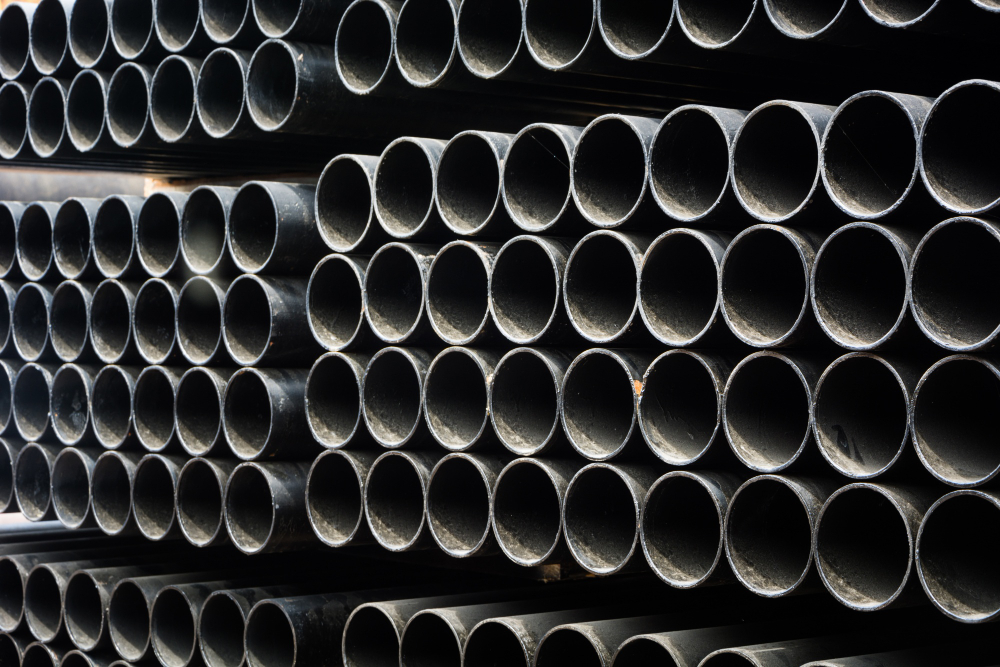
Steel pipe and steel tubing look almost identical, and many people use the two words as if they mean the same thing. In the metal world, though, they are different products with different measurements, uses, and standards. If you order the wrong one, you can end up with parts that do not fit or a material that is not right for the job.
Here is a clear breakdown of how steel pipe and steel tubing differ, and how to make sure you order exactly what your project needs.
The short answer
A pipe is built to carry things. It is designed to move fluids and gases, so what matters most is the space inside it and the pressure it can handle. A tube is built to hold things up. It is designed for structural and mechanical work, so what matters most is its exact outside size and strength. That single difference in purpose drives everything else.
How pipes and tubes are measured
This is the difference that trips people up most often. Pipe and tube are measured by completely different systems.
Pipe is sized by Nominal Pipe Size, or NPS, along with a schedule that sets the wall thickness. NPS is a rough label based on the old idea of the bore, or the hole for flow, so it does not match the actual outside diameter. A 2-inch pipe, for example, actually measures about 2.375 inches across the outside. For a given pipe size, the outside diameter stays the same while the schedule changes the wall thickness, so a higher schedule means a thicker wall and a higher pressure rating.
A tube is sized by its actual outside diameter and its wall thickness, which is often given as a gauge. A 1-inch tube measures exactly 1 inch across the outside. What you see on the spec sheet is what you measure with a tape or calipers. In short, a pipe is described by the space inside, while a tube is described by the size outside.
What each one is used for
Because they are built for different jobs, pipe and tube tend to show up in very different places.
● Pipe carries liquids and gases. Think water lines, gas lines, plumbing, and process piping, where flow and pressure are what count.
● Tube supports structures and machines. Think railings, handrails, framing, furniture, trailers, and machinery, where strength and a precise fit matter most.
So a plumber running a water line reaches for pipe, while a fabricator welding up a handrail or a frame reaches for tube.
Shape, tolerances, and cost
A few more practical differences separate the two products.
● Shape. Pipe is always round. Tube comes in round, square, rectangular, and oval shapes, which is one reason it is so popular for structural and decorative work.
● Tolerances. Tube is made to tighter tolerances, so its dimensions are more exact. That precision makes it easier to fit and weld parts together cleanly.
● Cost. Because of those tighter tolerances and extra quality checks, tube usually costs more per foot than pipe of a similar size.
Why ordering the right one matters
Since pipe and tube are measured differently, the same size label can describe two different products. A 1-1/4 inch pipe has an outside diameter of about 1.660 inches, while a 1-1/4 inch tube measures exactly 1.250 inches. Order the wrong one and your brackets, sleeves, or welded joints may not line up.
The fix is to be specific when you order:
● For pipe, give the nominal size and the schedule, such as “2-inch Schedule 40 pipe.”
● For round tube, give the outside diameter and the wall thickness or gauge, such as “2-inch OD round tube, 14 gauge.”
● For square or rectangular tube, give both dimensions and the wall, such as “2 by 3 rectangular tube, 3/16 wall.”
It also helps to name the material, since carbon steel, stainless steel, and aluminum all come in tube and pipe forms with different properties and lead times.
How Curtis Steel helps you get the right product
The easiest way to avoid an ordering mistake is to work with a supplier who knows the difference and asks the right questions. Curtis Steel & Aluminum has supplied Nevada since 1970 and stocks tubing in round, square, and rectangular shapes in both carbon steel and aluminum, along with the full range of steel products and welding supplies.
Our team can help you confirm whether you need pipe or tube, choose the right size and wall, and process the material before it leaves our facility. With services like saw cutting and rolling, your material can arrive cut to length or shaped to your radius, ready to use. We serve contractors, fabricators, and individual customers alike, so no project is too small.
Frequently asked questions
What is the main difference between steel pipe and steel tubing?
The main difference is how they are measured and used. Pipe is designed to carry fluids and gases and is sized by nominal pipe size and schedule, which is based on the bore and flow.
Is a 1-inch pipe the same size as a 1-inch tube?
No. A 1-inch tube has an actual outside diameter of 1 inch, but a 1-inch nominal pipe has an outside diameter of about 1.315 inches.
How do I order steel pipe versus steel tubing?
For pipe, give the nominal pipe size and the schedule, such as a 2-inch Schedule 40 pipe. For tube, give the outside diameter and the wall thickness or gauge, such as a 2-inch OD round tube in 14 gauge.
Which is stronger, pipe or tube?
Neither is simply stronger, because they are rated for different things. Pipe is rated for pressure, since it carries fluids and gases. Tube is rated for structural strength and load, since it is used in framing and mechanical work.
Can steel tubing be used for plumbing or carrying water?
It generally should not be. Tube is made for structural and mechanical use and is not rated for the pressure and flow that plumbing requires. For carrying liquids or gases, pipe is the correct product.
Conclusion
Steel pipe and steel tubing may look the same, but they are built for different jobs. Pipe is measured by nominal size and schedule and is made to carry fluids and gases under pressure. Tube is measured by its exact outside diameter and wall thickness and is made for structural and mechanical work in round, square, and rectangular shapes. When you know which one your project needs and specify it clearly, you save time, money, and frustration.
At Curtis Steel & Aluminum, we have supplied Nevada with quality metal since 1970, and our team is glad to help you pick the right product and get it cut and shaped to your specifications. Whether you are a contractor or a first-time buyer, we make it easy to order exactly what you need.
Call us at 702.952.3000 to talk through your project, or request a quote to get started.